Plural in German
For English speakers, the plural in German is exasperating. We are happy to just add a simple “–s”. In German it’s much more complicated. Get into fighting mode; we think you’ll need to. Here’s our explanation:
Summary of the most common plurals
Because this subject is pretty complicated, we’ve made a small table
with the most common suffixes for making the plural depending on the gender:
Some nouns do not have a plural form in German:
- Names of countries, rivers, cities:
| Example |
Meaning |
| die Türkei |
Turkey |
| die Wolga |
the Volga |
| München |
Munich |
- Abstract concepts:
| Example |
Meaning |
| die Zweisprachigkeit |
bilingualism |
| die Abgespanntheit |
exhaustion |
| die Zuvorkommenheit |
courtesy |
| die Wut |
rage |
General rules that are applicable to all genders
Constructing the plural with “-s”
Just like in English it’s normal to construct the plural with the ending “–s”. In German,
however, only a few adopted foreign words have this plural.
| Noun |
Plural |
Meaning |
| die Kamara |
die Kamaras |
camera |
| der Gorilla |
die Gorillas |
gorilla |
| das Auto |
die Autos |
car |
The plural for feminine nouns
The construction of the plural for feminine nouns is the easiest in German:
The possibilities are:
The large majority of feminine nouns that do not end in “-e” make their plural with “-en”:Adding “-en”
| Noun |
Plural |
Meaning |
| die Datei |
die Dateien |
file |
| die Wohnung |
die Wohnungen |
apartment |
| die Fabrik |
die Fabriken |
factory |
The following endings which guarantee that the noun is feminine should be emphasized: “-ei”, “-ung”, “-heit”, “-keit”, “-ion”, “-schaft”, “-ik”, “-eur”, “-enz”, “-tät”, “-itis”, “-sis”.
Adding “-n”
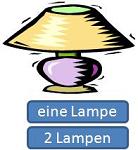
If a feminine noun ends in “-e”, its plural is always constructed with “-n”
(Note: Not all nouns ending with “-e” are feminine. For example: der Käse)
| Noun |
Plural |
Meaning |
| die Lampe |
die Lampen |
lamp |
| die Fantasie |
die Fantasien |
fantasy |
| die Narzisse |
die Narzissen |
narcissus |
The following endings guarantee that the noun is feminine and their plural is
with “-n” : -ie , -ade, -age, -ere, -ine, -isse, -ive, -se,
Adding “-nen”
The feminine nouns that end in “-in” make their plural with “-nen”.
| Noun |
Plural |
Meaning |
| die Chefin |
die Chefinnen |
boss |
Adding [Umlaut] + “-e”
A few feminine nouns add [Umlaut] + “-e”.
| Noun |
Plural |
Meaning |
| die Kraft |
die Kräfte |
force |
| die Angst |
die Ängste |
fear |
Plural: “-a” ➜ “-en”
Some words not from German origin ending in “-a” make their plural with “-en”
| Noun |
Plural |
Meaning |
| die Firma |
die Firmen |
company |
| die Skala |
die Skalen |
scale |
Plural: “-sis” ➜ “-sen”
Nouns ending in “-sis” construct their plural with “-sen”
| Noun |
Plural |
Meaning |
| die Analysis |
die Analysen |
analysis |

Plural: “-xis” ➜ “-xien”
The plural for nouns ending with “-xis” are constructed with “-xien”
| Noun |
Plural |
Meaning |
| die Galaxis |
die Galaxien |
galaxy |
Plural: “-itis”➜ “-iden”
The feminine nouns ending with “-itis” construct their plural with -den
| Noun |
Plural |
Meaning |
| die Cellulitis |
die Cellulitiden |
cellulitis |
Plural: “-nis” ➜ “-nisse”
Feminine nouns ending in “-nis” construct their plural by adding the ending “-se”
| Noun |
Plural |
Meaning |
| die Befugnis |
die Befugnisse |
authorization |
Plural: “-aus” ➜ “-äuse”
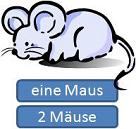
Feminine nouns ending with “-aus” add an Umlaut over the “a” and add the ending “e”.
| Noun |
Plural |
Meaning |
| die Maus |
die Mäuse |
mouse |
Adding [Umlaut]
There are two feminine nouns that construct their plural with Umlaut: “Mutter” and “Tochter”.
| Noun |
Plural |
Meaning |
| die Mutter |
die Mütter |
mother |
| die Tochter |
die Töchter |
daughter |
Adding [Umlaut] + “-en”
A plural form that is not very common is the [Umlaut] + “–en” that practically is used only with the word “Werkstatt”
| Noun |
Plural |
Meaning |
| die Werkstatt |
die Werkstätten |
workshop |
Plural for masculine nouns
Many masculine nouns form their plural with “-e”.
The endings that guarantee the use of this plural are:
“-ich”, “-ig”, “-ling”, “-är” (only those coming from French)
and “-eur”.Adding “-e”
| Noun |
Plural |
Meaning |
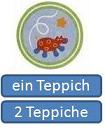
| der Teppich |
die Teppiche |
carpet |
| der König |
die Könige |
king |
| der Schmetterling |
die Schmetterlinge |
butterfly |
| der Veterinär |
die Veterinäre |
veterinarian |
| der Friseur |
die Friseure |
barber |
Adding [Umlaut] + “-e”
Some nouns form the plural with [Umlaut] + “-e”. We emphasize the following:
| Noun |
Plural |
Meaning |
| der Platz |
die Plätze |
seat |
| der Kuss |
die Küsse |
kiss |
| der Hals |
die Hälse |
neck |
| der Arzt |
die Ärzte |
doctor |
| der Fluss |
die Flüsse |
river |
Not adding any ending
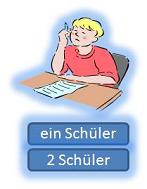
Many masculine nouns ending with “-er” and “-el” do not add any ending.
| Noun |
Plural |
Meaning |
| der Schüler |
die Schüler |
student |
| der Würfel |
die Würfel |
dice |
Adding [Umlaut]
Many masculine nouns ending with “-er” and “-el” add just an Umlaut.
| Noun |
Plural |
Meaning |
| der Vater |
die Väter |
father |
| der Mantel |
die Mäntel |
overcoat |
Adding “-n” [according to the N-Deklination]
Many masculine nouns ending with “-e” are declined according the “N-Deklination”.
|
Singular |
Plural |
| Nominative |
der Kunde |
die Kunden |
| Accusative |
den Kunden |
die Kunden |
| Dative |
dem Kunden |
den Kunden |
| Genitive |
des Kunden |
der Kunden
|
Examples of nouns that follow the “N-Deklination”:
| Noun |
Plural |
Meaning |
| der Name |
die Namen |
name |
| der Buchstabe |
die Buchstaben |
letter |
There are many exceptions that do not follow the “N-Deklination” such as:
| Noun |
Plural |
Meaning |
| der Käse |
die Käse |
cheese |
| der See |
die Seen |
lake |
Advice: If you have to take a German test, learn the gender and plural
of “der Käse” as it’s one of professors’ favorite words.
Adding “-en” [according to the N-Deklination]
Words with a Greek or Latin ending in “-at”, “-ant”, “-ent” and “–ist” are declined
according to the “N-Deklination”.
|
Singular |
Plural |
| Nominative |
der Pianist |
die Pianisten |
| Accusative |
den Pianisten |
die Pianisten |
| Dative |
dem Pianisten |
den Pianisten |
| Genitive |
des Pianisten |
der Pianisten |
Examples of nouns that follow the “N-Deklination”:
| Noun |
Plural |
Meaning |
| der Student |
die Studenten |
student |
| der Soldat |
die Soldaten |
soldier |
| der Liferant |
die Liferanten |
supplier |
| der Violinist |
die Violinisten |
violinist |
Adding “-en” [no “N-Deklination”]
Although it is not very common, there are also nouns that construct the plural
with “-en” without “N-Deklination”.
| Noun |
Plural |
Meaning |
| der Staat |
die Staaten |
state |
| der Doktor |
die Doktoren |
doctor |
Adding “-er”
Very few masculine nouns construct the plural with “-er”.
It is a plural construction that is much more common with neuter nouns.
| Noun |
Plural |
Meaning |
| der Leib |
die Leiber |
body |
Adding [Umlaut] + “-er”
A few masculine nouns’ plural form is made with [Umlaut] + “-er”.
| Noun |
Plural |
Meaning |
| der Mann |
die Männer |
man |
| der Gott |
die Götter |
God |
Adding “-ten”
One the rarest masculine nouns is constructed with the suffix “-ten”
| Noun |
Plural |
Meaning |
| der Anbau |
die Anbauten |
annex |
Plural: “-us” -> “-usse”
Most of the masculine nouns ending with “-us” add “-se”, meaning that an extra –s is added.
| Noun |
Plural |
Meaning |
| der Zirkus |
die Zirkusse |
circus |
| der Bus |
die Busse |
bus |
Plural: “-us” -> “-i”
There are a few masculine nouns that come from Latin and end with “us”, forming the plural with “i”
| Noun |
Plural |
Meaning |
| der Modus |
die Modi |
mode |
| der Ficus |
die Fici |
ficus |
The plural for neuter nouns
Adding “-e”
The most common plural form for neuter nouns is constructed with the ending “-e”
| Noun |
Plural |
Meaning |
| das Alphabet |
die Alphabete |
alphabet |
| das Protokoll |
die Protokolle |
record |
No ending added
Almost all of the neuter nouns ending with “-er” or “-el” or “-en”.
| Noun |
Plural |
Meaning |
| das Leder |
die Leder |
leather |
| das Kabel |
die Kabel |
cable |
| das Abkommen |
die Abkommen |
agreement |
Adding “-er”
Many neuter nouns construct the plural with “-er”.
| Noun |
Plural |
Meaning |
| das Bild |
die Bilder |
picture |
| das Lied |
die Lieder |
song |
Adding [Umlaut] + “-er”
The plural [Umlaut] + “-er” is very common with neuter nouns.
| Noun |
Plural |
Meaning |
| das Fahrrad |
die Fahrräder |
bicycle |
| das Blatt |
die Blätter |
leaf |
| das Haus |
die Häuser |
home |
Adding “-en”
A few neuter nouns add “-en” to construct the plural.
| Noun |
Plural |
Meaning |
| das Bett |
die Betten |
bed |
| das Verb |
die Verben |
verb |
Adding “-ien”
The plural formed with the suffix “-ien” is not very common.
| Noun |
Plural |
Meaning |
| das Adverb |
die Adverbien |
the adverb |
| das Prinzip |
die Prinzipien |
the principle |
Plural “-nis” ➜ “-nisse”
For nouns ending with “-nis”, a suffix, “-se”, is added (another –s is added).
| Noun |
Plural |
Meaning |
| das Ergebnis |
die Ergebnisse |
result |
| das Geheimnis |
die Geheimnisse |
secret |
Plural “-um” ➜ “-a”
A few nouns originating from Latin ending with “-um” construct their plural with “-a”.
| Noun |
Plural |
Meaning |
| das Antibiotikum |
die Antibiotika |
antibiotic |
| das Analgetikum |
die Analgetika |
analgesic |
Plural “-um” ➜ “-en”
Most nouns originating from Latin ending with “-um” construct their plural with “-en”.
| Noun |
Plural |
Meaning |
| das Aquarium |
die Aquarien |
aquarium |
| das Ministerium |
die Ministerien |
ministry |
Plural “-o” ➜ “-en”
Another rare plural form is that of the neuter nouns ending in “-o”.
| Noun |
Plural |
Meaning |
| das Bankkonto |
die Bankkonten |
bank account |
]]>